






Marvel’s Wolverine Review – A Brutal, Mature, and Surprisingly Emotional Take on Logan
Wolverine has always been one of my favorite Marvel characters, so I entered Marvel’s Wolverine with fairly high expectations—and quite a few concerns. After my experience with the later stages of Marvel’s Spider-Man 2, I was particularly worried about whether Insomniac Games could deliver a story worthy of a character as complex as Logan.
Wolverine needs more than blood, claws, and brutal takedowns. His appeal comes from the conflict underneath the violence: the grief, anger, loyalty, and humanity hidden behind the animalistic persona.
Thankfully, Marvel’s Wolverine manages to capture much of that complexity while delivering one of the most satisfying superhero combat systems I have experienced.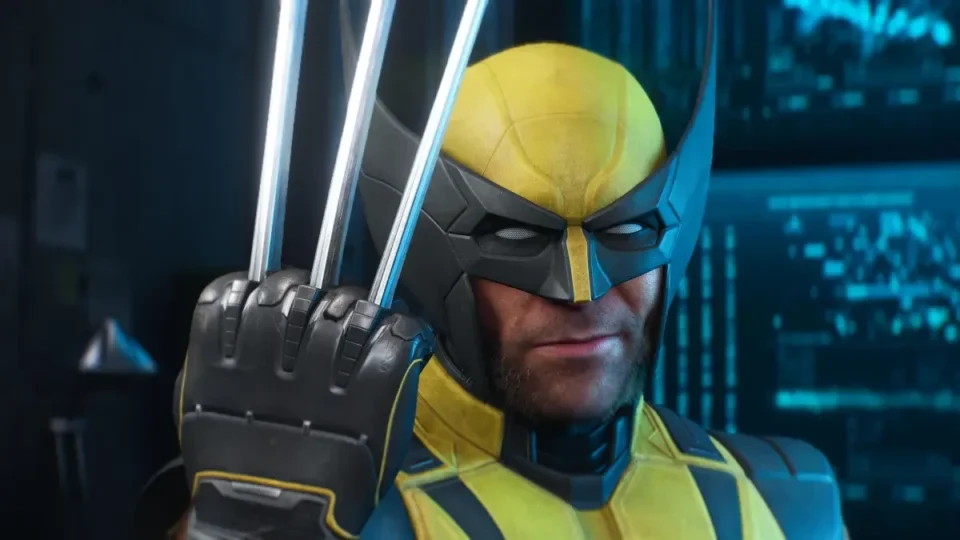
An Original Story That Understands Logan
Marvel’s Wolverine tells an original story rather than directly adapting a specific comic-book storyline. The game explores Wolverine's early journey and the formation of the X-Men, but with a major twist: this version of the team is not assembled by Professor X.
Instead, Dr. Essex brings together Wolverine, Mystique, and Sabretooth for a mission to rescue mutants from the control of the villainous Trask.
What initially appears to be a straightforward rescue operation quickly evolves into something much bigger, with the story constantly moving between intense action sequences and more personal dramatic moments.
What surprised me most was how well the writing handled Logan himself.
The game avoids reducing Wolverine to nothing more than an angry character who solves every problem with his claws. Instead, Logan is portrayed as a deeply layered individual who cares about the people around him while struggling to express his own emotions.
His sadness, internal conflicts, loyalty, and complicated relationship with violence all play an important role in shaping the character.
He is still the rough, intimidating Canadian we know, but there is a clear sense of humanity underneath the Wolverine persona.
The supporting cast receives solid treatment as well. Mystique, Dr. Essex, and Jean Grey all have meaningful roles, with each character contributing to the story in a different way.
The main villain also benefits from strong narrative presence. Rather than disappearing for long stretches, his influence can be felt throughout the story, creating anticipation for the eventual confrontation.
Excellent Voice Acting and Cinematic Direction
The strong writing is supported by an impressive voice cast, with Wolverine and Dr. Essex standing out in particular.
The performances give the dialogue considerably more weight, making even quieter conversations feel meaningful.
Insomniac also delivers some excellent cinematic direction. Cutscenes transition smoothly into action, while dramatic sequences are given enough room to breathe before the game throws you back into the chaos.
This balance helps maintain a strong pace throughout the campaign.
One of the Best Superhero Combat Systems
If the story was a pleasant surprise, the combat was the game's biggest strength.
Marvel’s Wolverine delivers a combat system that feels specifically designed around Logan's abilities. It is aggressive, fast, violent, and constantly encourages you to stay in the middle of the fight.
The core system gives you plenty of options, including combos, finishers, parries, grabs, and special attacks.
Wolverine's regeneration also plays an important role in the design. Because Logan can recover from damage, the game encourages a much more reckless offensive approach than many traditional action games.
One of the most interesting mechanics is the Rage Meter, which is divided into three levels.
Maintaining a constant offensive rhythm gradually fills the meter, eventually allowing Wolverine to activate Berserker Frenzy. During this state, his attacks become faster and significantly more lethal, allowing him to unleash some of the game's most brutal finishers.
Alternatively, the meter can be used to activate Wolverine's regeneration and recover from what would otherwise be a fatal situation.
The combat system also includes Combo Enders, Impaling Strikes, and a precise Parry system that rewards players who learn enemy attack patterns and react at exactly the right moment.
All of these mechanics work together to create a combat loop that constantly pushes you forward rather than encouraging passive play.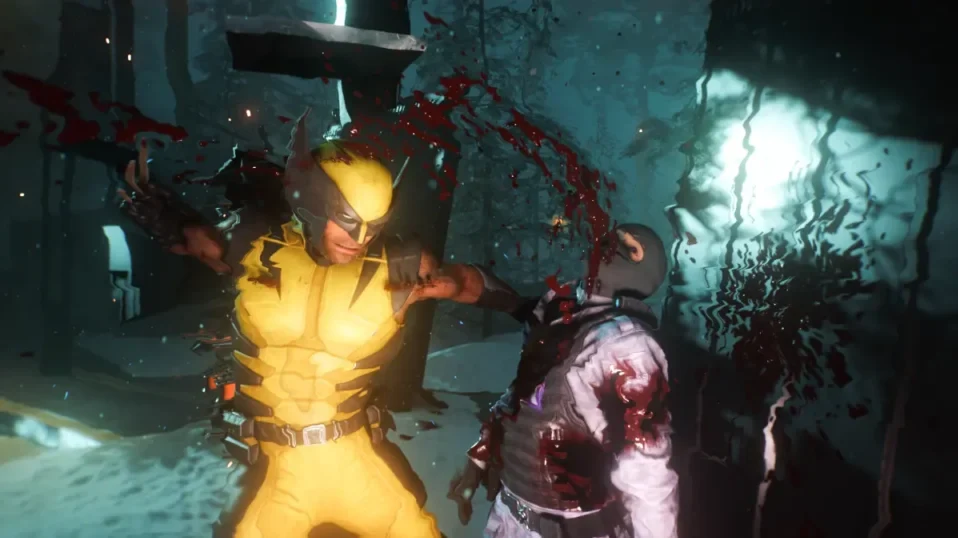
Skills and RPG Elements
The progression system adds another layer of depth.
A large skill tree allows Wolverine to unlock new attacks and improve existing abilities, giving players more freedom to customize how they approach combat.
The game also features special abilities known as Special Techniques. Each technique has three upgrade levels and can be improved as Wolverine progresses.
These abilities require charging through combat or by converting leftover Rage Meter energy after a battle.
There is also a lightweight RPG system called Adaptations.
These genetic mutations can be integrated into Wolverine's DNA to enhance his combat abilities. Players can activate different mutations and upgrade their Adaptation Level using AP points.
AP can be earned through exploration, including finding bottles scattered throughout the environment that unlock fragments of Wolverine's memories.
Players can also enter Nightmare Doors, which contain optional combat challenges. Performing better in these challenges rewards more AP, encouraging players to explore the game's world instead of simply following the main story.
The combination of these systems gives the combat enough variety to avoid becoming repetitive over the course of the campaign.
Fantastic Enemy Variety and Boss Battles
The quality of the combat is further enhanced by strong encounter design.
Enemy variety is good enough to force you to constantly change your approach, while different enemy types encourage you to make use of Wolverine's entire arsenal rather than relying on the same attack repeatedly.
Boss battles are another highlight.
Each major encounter introduces its own mechanics and requires careful use of dodges, parries, openings, and Special Techniques.
Rather than feeling like simple damage sponges, the bosses encourage players to understand their patterns and react accordingly.
This combination of enemy variety, boss design, and Wolverine's extensive moveset makes combat one of the game's strongest aspects from beginning to end.
Cinematic Sequences Break Up the Action
The game also understands that Wolverine cannot spend the entire campaign fighting.
There are several cinematic sequences that break up the combat, including motorcycle chases, traversal across rooftops, and other action-heavy set pieces.
These moments provide welcome variety and give the campaign a stronger cinematic rhythm.
More importantly, they prevent the game from falling into a repetitive cycle of arena fight after arena fight.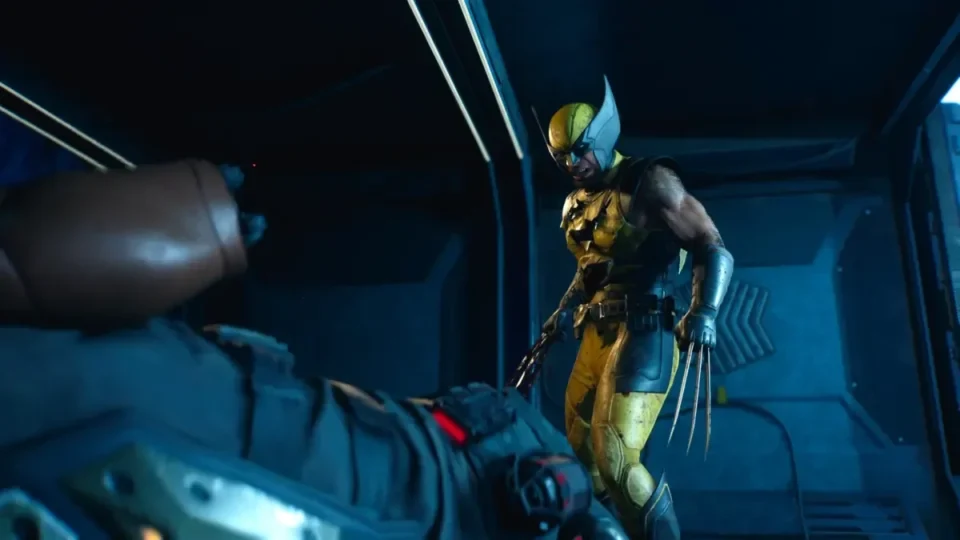
Side Content Is Surprisingly Limited
Unfortunately, the same level of attention was not given to the side content.
Optional activities are relatively simple and mostly revolve around collecting bottles, completing challenges for AP, or finding ways to upgrade Wolverine's health and equipment.
While these activities are useful for progression, I found myself wishing the game offered more substantial optional missions or stories.
The main campaign receives considerably more attention, and that focus is noticeable when you explore beyond the central storyline.
A Wolverine Suit Worthy of Logan
There is a famous joke in the X-Men universe about Wolverine's costume, but Insomniac has little to worry about here.
The suit design is one of the game's visual highlights and, in my opinion, one of the best interpretations of Wolverine's costume ever seen in a video game.
That attention to detail extends across the entire presentation.
Wolverine's suit, skin, hair, and facial details are all rendered with impressive accuracy, while the damage system makes combat look particularly brutal.
Clothing and flesh visibly react to damage, helping sell the impact of every fight.
The environments are equally impressive, with a strong variety of locations and excellent character designs for major figures such as Jean Grey and Mystique.
Enemy designs also feature considerable visual variety.
Combined with advanced lighting and detailed visual effects, Marvel’s Wolverine frequently feels more like an interactive cinematic production than a traditional action game.
Strong Audio and Music
The audio presentation is just as impressive.
The soundtrack shifts naturally between quieter, emotional compositions during dramatic scenes and faster, more intense music during combat.
This helps reinforce the mood of each sequence without becoming distracting.
The voice performances also complement the soundtrack and sound design, creating a convincing atmosphere around both the emotional and violent sides of Wolverine's character.
Excellent Technical Performance on PS5
I played Marvel’s Wolverine on the standard PS5 and was impressed with its technical stability.
Even during some of the most chaotic encounters, filled with enemies, destruction, and visual effects, the game maintained a smooth experience without noticeable frame-rate drops or technical problems that interrupted the gameplay.
That level of stability is particularly important in a game where combat relies so heavily on precise timing and fast reactions.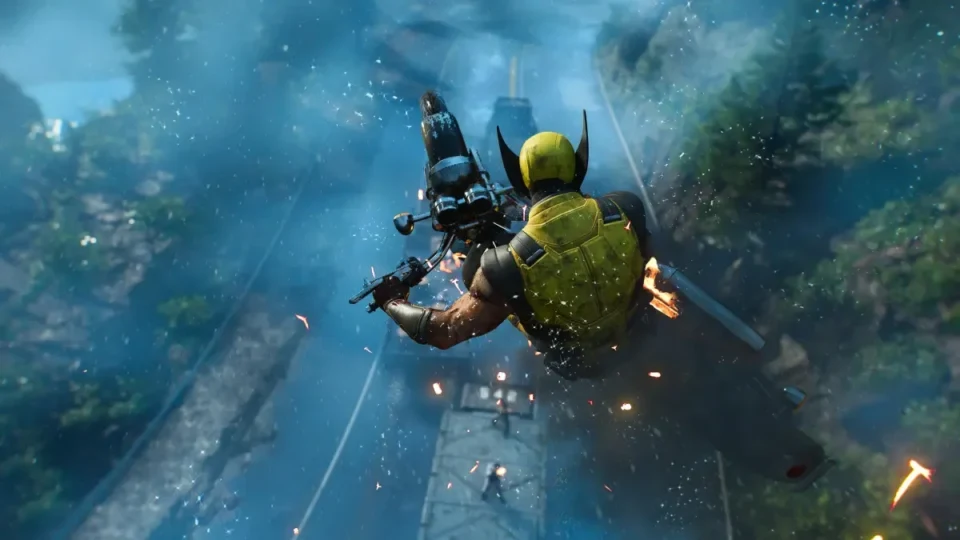
Final Verdict
Marvel’s Wolverine ultimately exceeded my expectations.
I entered the game worried that Insomniac might repeat some of the storytelling problems I experienced with Marvel’s Spider-Man 2, but the result was surprisingly different.
The game understands that Wolverine is not simply a character with claws.
It presents Logan as a violent but deeply human figure, balancing anger with compassion, grief with loyalty, and brutality with genuine emotional depth.
The combat is the game's biggest strength, offering an aggressive and highly satisfying system that feels perfectly suited to Wolverine.
The story, cinematic presentation, voice acting, progression systems, boss encounters, and visual quality all come together to create a remarkably complete superhero experience.
The limited side content is one of the few areas where I wanted more, but it does little to diminish the quality of the core campaign.
For me, Marvel’s Wolverine stands among the strongest superhero games I have played—and most importantly, it feels like a game that genuinely understands why Logan has remained one of Marvel's most beloved characters.


